

Machine
Walking Pad Workouts: How to Turn Desk Time Into a 3-Hour Walking Week
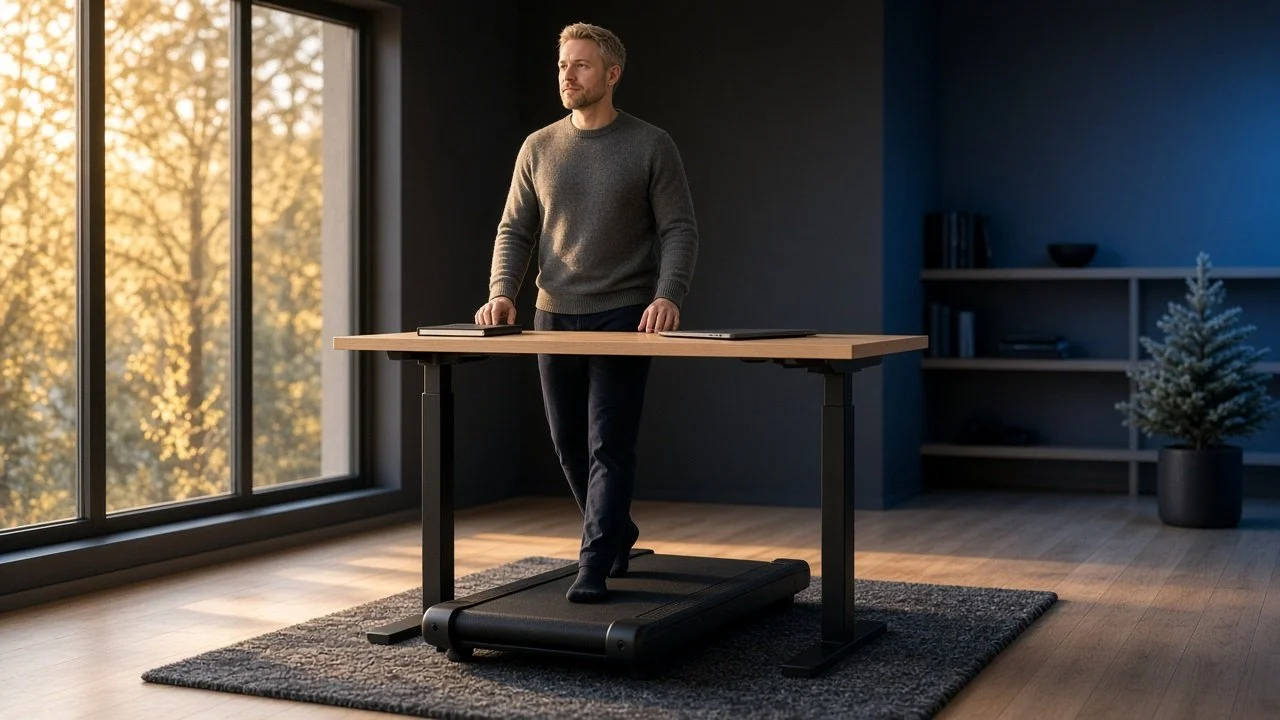
In 1999, Dr. James Levine of the Mayo Clinic built the first treadmill desk from a hospital tray table and a secondhand Sears treadmill. He had already given a name to the quiet energy of everyday movement — NEAT, or non-exercise activity thermogenesis — and he wanted a way to walk while he worked. A later study from his lab found that people used about 191 kcal an hour walking at a self-chosen easy pace of around 1.1 mph, compared with about 72 kcal an hour sitting in a chair. That is a story about how the workday itself can move, not a weight-loss promise.
If you want a walking pad workout that turns ordinary desk time into a three-hour walking week, that is the thread here. Dr. Peter Attia teaches a simple talk test for Zone 2 — you can still speak in complete sentences, but you would rather not carry on a conversation — and he has described about two hours a week as a place to start, with three to four hours as an ideal. That is his practice, not a setting you have to copy, and not an endorsement of this page or of any product here.
Key Takeaways
A walking pad under a standing desk can turn sitting hours into easy walking hours. A short, dedicated bout can also use a conversational Zone 2 effort — movement for a workday, not a treatment and not a weight-loss plan.
- Start around two hours a week, and treat three to four hours as an ideal, as Attia describes. A smaller start of three 20-minute sessions appears in his Zone 2 demonstration video.
- Easy desk walking is usually slower and flatter than Attia's 15% treadmill walk. Neither pad in the menu reaches 15%. Use the talk test when you want a stronger, still-conversational effort; a heart-rate strap is optional.
- Give the motor rest breaks, and lubricate the belt as the manual directs. Black Friday is November 27 if you are waiting to buy.
Observation: what the data shows
Expert spotlight
Dr. James Levine, working at the Mayo Clinic, coined NEAT in 1999 and built that first treadmill desk the same year.[1] In a 2007 walk-and-work study, 15 sedentary adults used a vertical workstation and walked at a self-selected speed of about 1.1 mph. Mean energy use was about 191 kcal an hour walking and working, versus about 72 kcal an hour seated at the same kind of desk work.[2] Those figures describe energy use during the walk. They are not a prediction of weight change.
Dr. Peter Attia teaches the talk test as a practical way to find Zone 2.[3] On his AMA 12 notes he describes about two hours a week as a good place for a beginner to start, and three to four hours a week as an ideal. That same page is where he describes his own treadmill Zone 2 walk: a 15% incline at about 3.0 to 3.4 mph.[4] In a separate demonstration video, he has said he wants at least three hours a week in the zone, and that someone just starting out might do three 20-minute sessions a week.[5] Those are three related, but not identical, ways he has framed the work. None of them is a setting you have to copy on a walking pad.
Dr. Iñigo San-Millán discusses how to dose the frequency and duration of Zone 2 in a conversation with Attia. He describes Zone 2 as the highest effort that stays effectively aerobic before lactate begins to accumulate.[6] That is his framing, not a prescription written here.
Interpretation: what it means
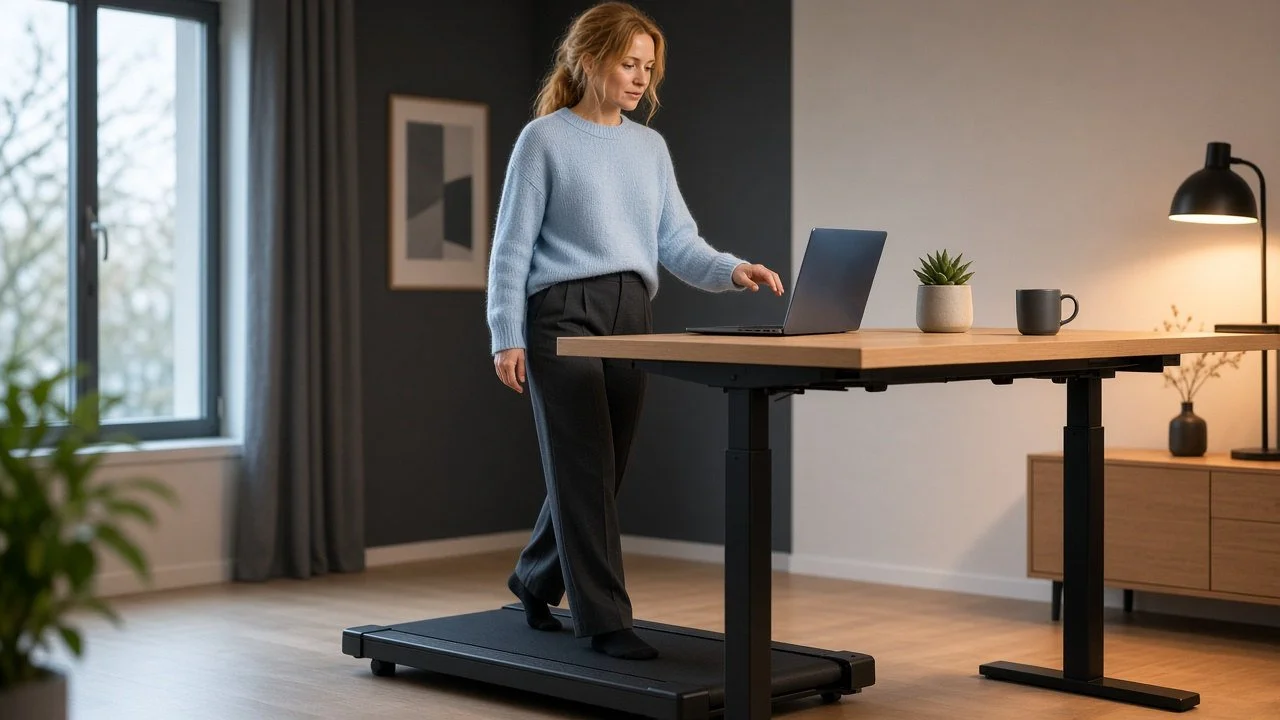
Two different walks live under the same roof. Levine's walk-and-work pace was slow — about a mile an hour — slow enough to type and talk. Attia's treadmill Zone 2 walk is a steeper, faster effort, and neither pad in the menu can host that 15% grade. The UREVO Strol 2E Pro has a manual incline of up to about 11–12% (the maker's bullets say 12%; Amazon's spec table and heading say 11%). The Vhorilix walking pad is flat, with a 4 mph cap and a 264 lb capacity. Use the pads for easy desk miles. If you want a stronger, still-conversational bout, stay with the talk test at a pace the machine can actually hold — do not treat the menu as a recreation of Attia's session.
A three-hour walking week sits inside the 3–4 hour ideal Attia has described. It is a guide, not a law. The energy numbers come from a small lab sample: they tell you that easy walking while working used more energy than sitting in that room, not what will happen to anyone's weight. If you have joint, balance, or heart concerns, talk with your clinician before you make long walking hours a daily habit.
Correlation: how it connects
A walking week sits next to the other home practices we already write about. Strength work you can do in the same room is in Resistance Band Workout. Recovery and fuel sit in How Much Protein Do I Need. And if the workday runs long, a short evening sit is in How to Meditate for Beginners.
The same Levine lab later followed employees who used treadmill desks for a year: daily movement rose and time spent sitting still fell. It was an uncontrolled trial, useful as a movement finding, not as a weight result.[7] Short walking breaks during long sits have also been measured in the lab.[8] If you already walk to a class, Peloton released a 15-minute 12% Hike on November 16, 2026, and its Intervals Walk classes launched earlier, on August 5, 2026 — 12% is still short of Attia's 15% treadmill walk. Apple Fitness+ Time to Walk offers audio-guided walks on Apple Watch or iPhone.
Emerging. Compact walking pads with a modest incline are making a walk-and-work desk easier to set up at home. The practice is still the one Levine started in 1999: walk while you work, and add a focused bout when you want one.
Application: what to do today
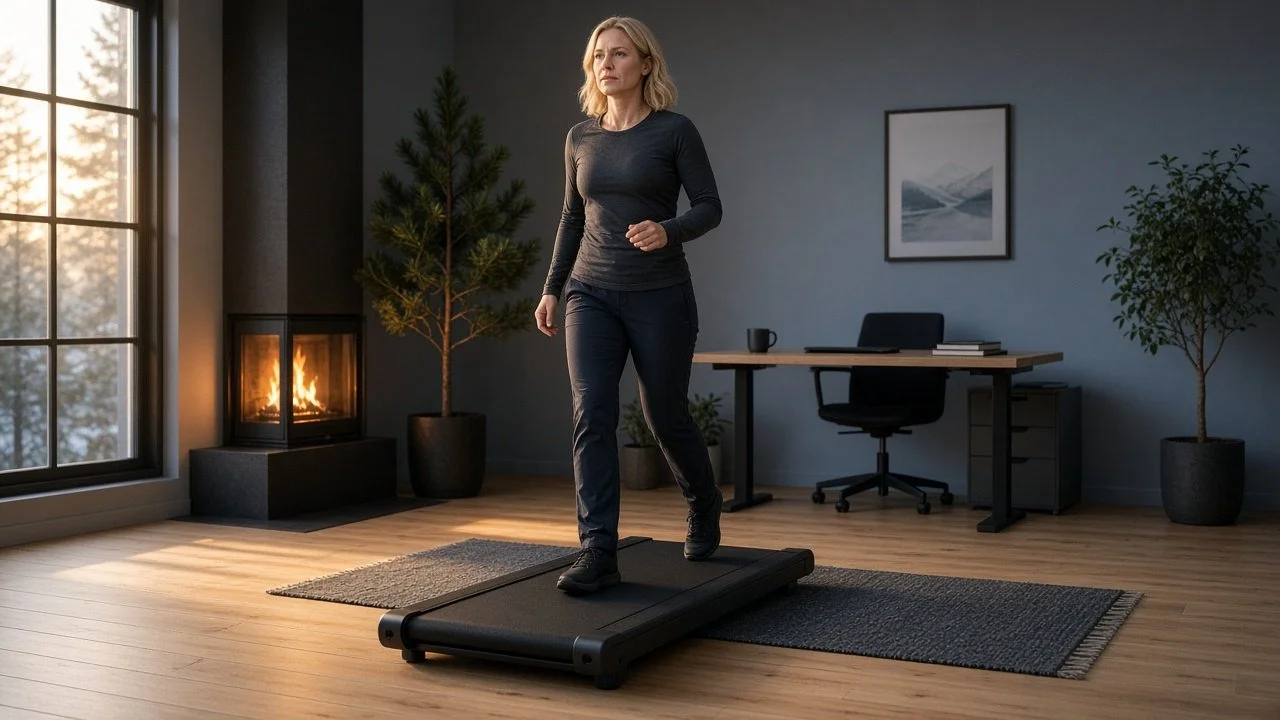
- Put a walking pad under a standing desk. Start at an easy pace you can type and talk at.
- Build toward a three-hour walking week from a short start. Attia's AMA 12 notes point to about two hours a week at first, and three to four hours as an ideal. If you want a smaller start, his Zone 2 demonstration video mentions three 20-minute sessions a week.
- For a stronger bout, use the talk test: you can speak in complete sentences, but you would rather not chat. A chest-strap heart-rate sensor is optional tracking, not the definition of the zone. These pads do not reach Attia's 15% treadmill grade.
- Durability: manuals advise rest breaks so the motor can cool, and scheduled lubrication of the belt. Follow the manual that came with your pad, and stay under its weight limit.
- If you are shopping, Black Friday is November 27. Prices below were checked on November 18 and can change.
- If walking aggravates a joint or you feel unwell, stop and talk with a clinician.
Strong body. Sharp mind. No gym. Real coaches. Next, read Resistance Band Workout, or take the Sorting Ceremony.
Body engineered.
References
- Levine, J. A., Eberhardt, N. L., & Jensen, M. D. (1999). Role of nonexercise activity thermogenesis in resistance to fat gain in humans. Science, 283(5399), 212–214. PMID 9880251.
- Levine, J. A., & Miller, J. M. (2007). The energy expenditure of using a “walk-and-work” desk for office workers with obesity. British Journal of Sports Medicine, 41(9), 558–561. PMID 17504789.
- Nelson, N., Yeater, T., & Attia, P. (2026, August 29). A better way to think about Zone 2. Peter Attia, MD.
- Attia, P. (2022, February 8). Peter Attia on Zone 2 and Zone 5 training (from AMA #12, originally released February 10, 2020). Peter Attia, MD.
- Attia, P. This is what Zone 2 training looks like. YouTube.
- San-Millán, I., & Attia, P. Zone 2 training: dose, frequency, and duration (from The Drive #201). YouTube.
- Koepp, G. A., Manohar, C. U., McCrady-Spitzer, S. K., et al. (2013). Treadmill desks: A 1-year prospective trial. Obesity, 21(4), 705–711. PMID 23417995.
- Dunstan, D. W., Kingwell, B. A., Larsen, R., et al. (2012). Breaking up prolonged sitting reduces postprandial glucose and insulin responses. Diabetes Care, 35(5), 976–983. PMID 22374636.
Disclaimer. As an Amazon Associate we earn from qualifying purchases. Fire & Ice Wellness LLC may earn a commission if you buy through links on this page. That does not change the price you pay. This page is educational, not medical advice, and nothing here is meant to diagnose, treat, cure, or prevent any disease.
