

Molecule
Do Air Purifiers Work? A Simple Guide to Cleaner Winter Air at Home
Winter closes the windows, and the air in the house sits still. Dr. Joseph Allen, who directs Harvard's Healthy Buildings program, recommends a HEPA air purifier and a MERV 13 filter in the HVAC system.[1] In a CIDRAP write-up of his later comments, he said that air purifiers only work if they are turned on.[3] If you have been wondering, do air purifiers work? That is the thread here. They move and filter particles when they are on and large enough for the space. They are not a medical device, and this page does not promise they will prevent illness.
Key Takeaways
A portable purifier can reduce particles in indoor air when it is sized for the room and left running. It does not remove carbon dioxide, and it is not a treatment.
- Sizing beats brand. Look at the clean air delivery rate (CADR). Allen's rule of thumb is 300 CADR for every 500 square feet, aiming for about four to six air changes per hour. CDC and NIOSH say to aim for five or more when possible — a target, not a guarantee.
- A HEPA filter catches particles, not CO2. In one home-exercise study, mean CO2 was 893 ppm and the maximum was 2,920 ppm; the purifier did not change that. Ventilate too.
- The DIY Corsi-Rosenthal box is a budget way to move a lot of air through MERV 13 filters. A commercial unit with a published CADR is the longer-term pick.
Observation: what the data shows
Expert spotlight
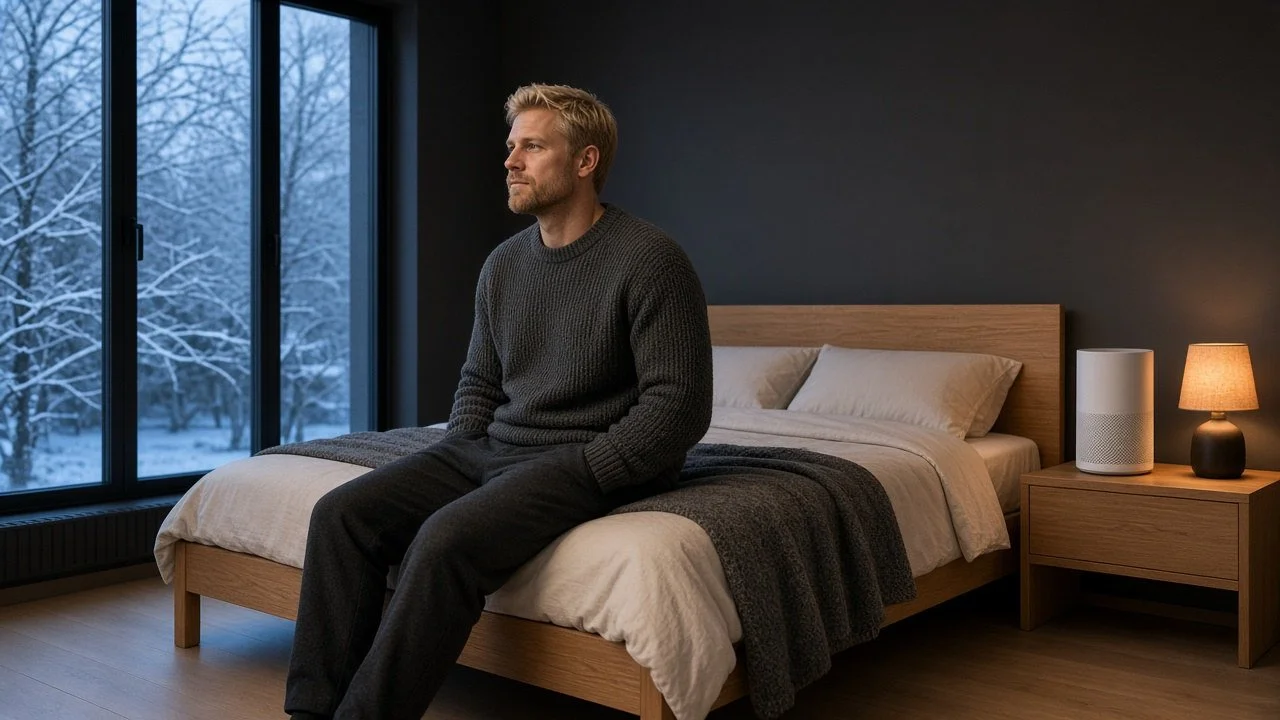
Dr. Joseph Allen, a professor of exposure assessment science at the Harvard T.H. Chan School of Public Health, recommends a HEPA purifier plus a MERV 13 HVAC filter.[1] In a via-CNET reprint of the article Harvard cites, he gives a sizing rule of thumb: 300 CADR for every 500 square feet, aiming for four, five, or six air changes per hour.[2] Those CADR figures are from the reprint, not from the Harvard page itself.
In a CIDRAP write-up of comments on a later care-home trial, Allen said that air purifiers only work if they are turned on, and that a unit too small for the room will not do the job. He and Dr. Linsey Marr of Virginia Tech, as CIDRAP identifies her, independently calculated that some undersized units were turning the air over only about once or twice an hour, well below CDC's five air changes an hour.[3] CDC and NIOSH say to aim for five or more air changes per hour of clean air when possible. That is a target, not a guarantee of totally safe air.[8]
Hay and colleagues, in JAMA Internal Medicine in 2026, placed portable HEPA units in 91 English care homes and found no difference in residents' winter respiratory infections compared with usual care.[4] That is a care-home finding, not a verdict on a bedroom at home, and this page makes no infection-prevention claim. Allen and Marr argued the units were too small and that the bar for calling a home compliant was low; the paper itself also said the CADRs were insufficient. The authors separately reported high staff-reported day-to-day use.
Dr. Richard Corsi, then dean of engineering at UC Davis, co-created the DIY Corsi-Rosenthal box with Jim Rosenthal: MERV 13 filters taped into a cube, with a box fan on top. A 2023 NIOSH science bulletin tested DIY filtration units, including a four-filter version of that design, in a mock classroom and found they can reduce airborne particles, with results that vary by filter, fan, and build quality.[5] The EPA has published guidance on DIY air cleaners. NIOSH also notes the EPA's position that DIY units are not a permanent substitute for commercial portable air cleaners of known performance.[5][6]
For a commercial unit, the EPA's home guide sizes by CADR and room area.[7] At about five air changes per hour, the Levoit Core 300-P is listed for about 222 square feet (AHAM smoke CADR 143; that is the 4.8 ACH figure, not the much larger once-an-hour coverage). The Coway Airmega Mighty AP-1512HH is listed for about 361 square feet at the same target.
Interpretation: what it means
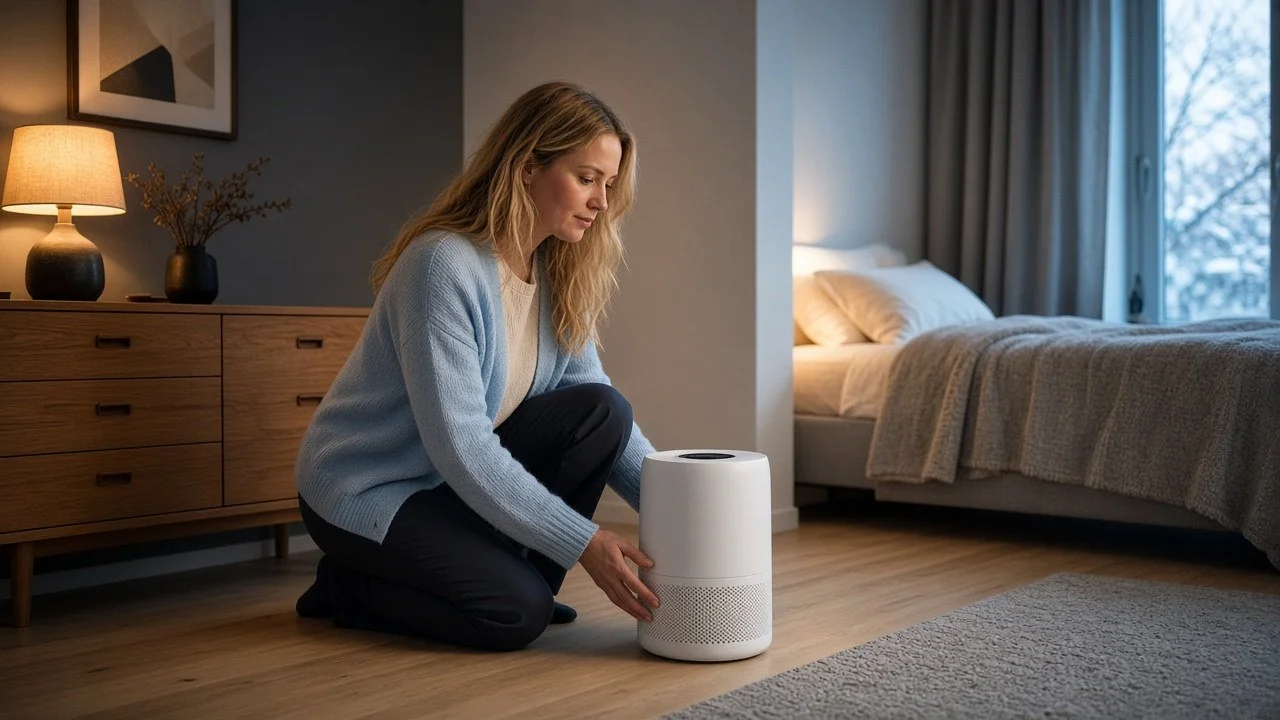
A portable purifier works by moving room air through a filter and capturing particles. That is a useful winter habit when the windows stay shut. It is not magic, and it is not a treatment. If you are looking for the best air purifier for a bedroom, start with CADR and the size of the room, not the brand on the box.
A HEPA filter does not remove carbon dioxide, which is a gas, not a particle. In a 2025 Healthcare study, Ilieș and colleagues monitored a single apartment used for home exercise. Mean CO2 was 893 ppm, with a maximum of 2,920 ppm. An air purifier run for one week did not significantly change CO2. It is a small, one-home study with low-cost sensors, and it is a clear reminder: a particle filter does not take the place of ventilation.[9] In a closed home training room, run a purifier for particles and still let in a little outdoor air when you can.
Correlation: how it connects
Cleaner winter air sits next to the other home practices we already write about. Strength work you can do in the same room is in Resistance Band Workout — ventilate that room too. Recovery and fuel sit in How Much Protein Do I Need. And if the evening is already a quiet indoor hour, a short sit is in How to Meditate for Beginners.
Emerging. Compact HEPA units and simple DIY boxes have made particle filtration easier to set up at home. The practice is still the one Allen describes: turn it on, size it for the room, and keep a path for outdoor air.
Application: what to do today
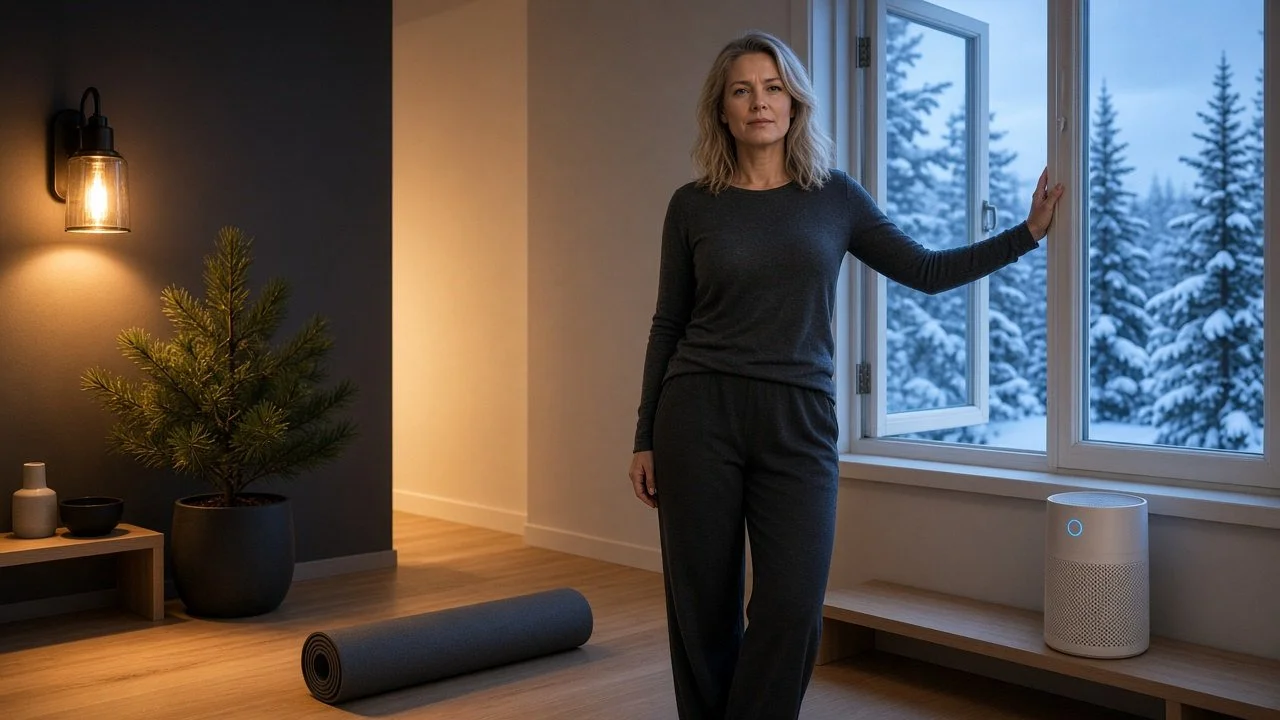
- Measure the room. Choose a HEPA unit whose smoke CADR can support about five air changes per hour — Allen's rule of thumb is 300 CADR for every 500 square feet, aiming for four to six. CDC and NIOSH say to aim for five or more when possible; that is a target, not a guarantee.
- As a check: the Levoit Core 300-P is listed for about 222 square feet at that ~5 air-change target; the Coway Airmega Mighty is listed for about 361 square feet.
- Place the unit in the open, not stuffed in a corner, and leave it on at a speed you can live with.
- If your HVAC system can take it, add a MERV 13 filter, as Allen recommends, alongside the portable unit.
- Budget path: a Corsi-Rosenthal box, following the EPA's DIY guidance. Use MERV 13 filters, seal the joints, and treat it as a capable budget tool, not a permanent stand-in for a unit with a published CADR.
- If you use the Coway, leave the ionizer off and let the pre-filter, carbon, and HEPA do the work. The EPA cautions that ion generators can produce ozone, a lung irritant, and may leave particles on surfaces.[10]
- In a home training room, ventilate too. The purifier will not lower CO2.
- Change or clean filters as the manual directs.
Strong body. Sharp mind. No gym. Real coaches. Next, read Resistance Band Workout, or take the Sorting Ceremony.
Body engineered.
References
- Feldscher, K. (2026, July 22). Simple steps for improving indoor air quality. Harvard T.H. Chan School of Public Health.
- We don't have a Clean Indoor Air Act. Are air purifiers the answer? (2026, July 19). Skeptic Society Magazine (via-CNET reprint of the July 15 article Harvard cites; a live cnet.com URL was not confirmed).
- Szabo, L. Can air purifiers prevent flu and COVID-19 in nursing homes? Only if they're used properly. CIDRAP News.
- Hay, A. D., et al. (2026). High-efficiency particulate air filters to prevent winter respiratory infections in care homes: The AFRI-c cluster randomized clinical trial. JAMA Internal Medicine, 186(9), 1124–1134. PMID 42507455.
- Derk, R., Coyle, J., Lindsley, W., et al. (2023, February 2). The effectiveness of DIY air filtration units. NIOSH Science Bulletin.
- U.S. Environmental Protection Agency. DIY air cleaners.
- U.S. Environmental Protection Agency. Guide to air cleaners in the home.
- Centers for Disease Control and Prevention / National Institute for Occupational Safety and Health. (2026, October 28). How much ventilation is enough? Aim for 5.
- Ilieș, A. B., et al. (2025). The home-based rehabilitation of patients through physical exercises in the context of indoor air quality. Healthcare, 13(13), 1493. PMID 40648520.
- U.S. Environmental Protection Agency. (2026, February 18). What are ionizers and other ozone generating air cleaners?
Disclaimer. As an Amazon Associate we earn from qualifying purchases. Fire & Ice Wellness LLC may earn a commission if you buy through links on this page. That does not change the price you pay. This page is educational, not medical advice, and nothing here is meant to diagnose, treat, cure, or prevent any disease.
