

Machine
Resistance Band Workout: Strength, Blood Sugar and Hormones on Autopilot
A set of resistance tubes with handles and a door anchor can cover the strength work adults are asked to do at least two days a week, without leaving your living room. Below, you'll see what current guidelines and studies say bands can do for strength and blood sugar, where the hormone promises go too far, and a five-move, full-body band routine you can start this week, plus the set we checked.
Observation: what the data shows
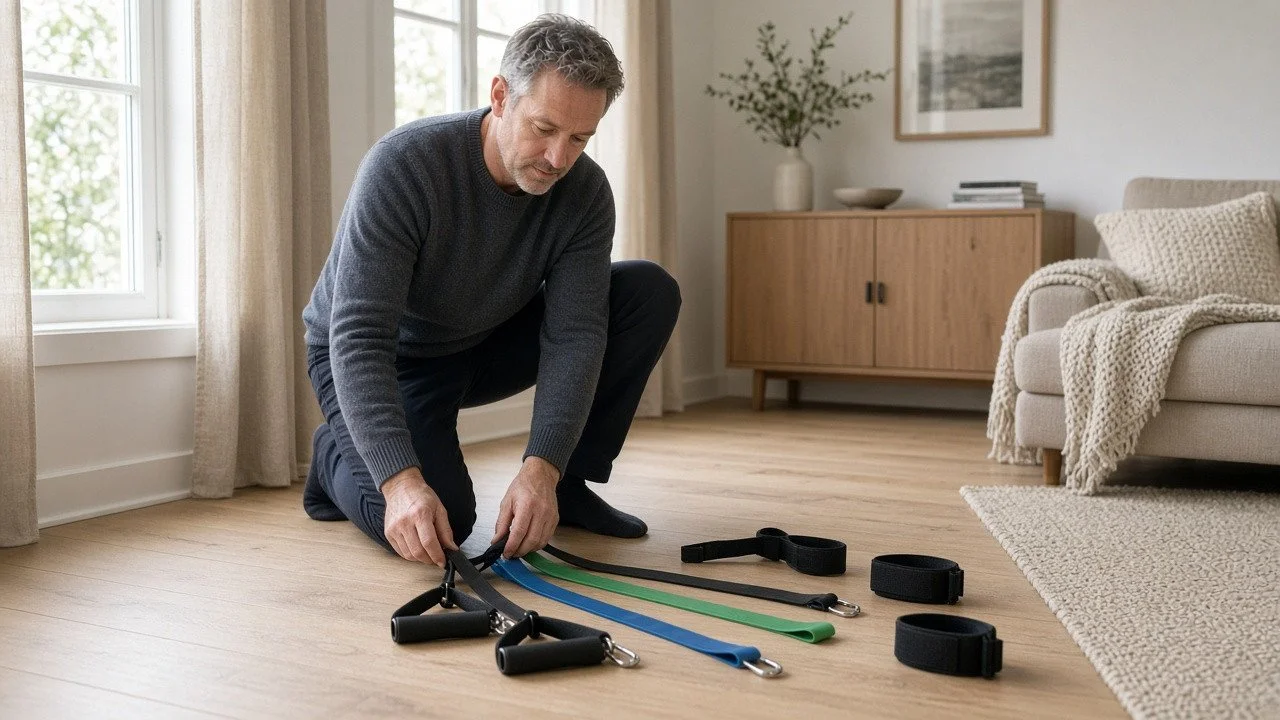
The U.S. Physical Activity Guidelines for Americans (2nd edition, 2018) and the WHO 2020 guidelines ask adults for muscle-strengthening of all the major muscle groups on two or more days a week. Elastic tubes can count as that work when the tension is hard enough. Progression matters: a thicker tube, a shorter lever, or a slower tempo, not a hope that any light stretch will do. Bands are a practical home tool, not a magic one.
That strength habit is linked, in clinical reviews, to better blood-sugar control in people with or at risk for type 2 diabetes. A 2021 review by Qadir and colleagues found that both free-weight and resistance-band training, at a hard enough intensity, were effective in adults at risk. Do not read that as “bands are better,” and do not read it as a reason to change diabetes medicine. ADA Standards of Care include resistance training as part of care for many people with diabetes. It is supporting evidence, not a treatment. People with diabetes, heart disease, or a long layoff should talk with their doctor before starting hard effort.
Interpretation: what it means

Home fitness gear is often sold with a big promise: train a little and your hormones will run on autopilot. That is a slogan, not a finding. A band routine does not come with promised effects on testosterone, thyroid, cortisol, or growth hormone, and there are no hormone target ranges to chase here. What does hold up is a pattern: sleep, stress care, regular strength work, and a lower-glycemic way of eating all travel with how insulin and cortisol behave, and with how stressed or insulin-resistant you feel. That is a pattern, not a do-it-yourself hormone prescription. Labs and medicines belong with your clinician.
A weekly minute count, or two sets of eight to twelve, is a teachable template, not a magic dose. Full-body band sessions two or three days a week, with a day’s rest between, are enough to start.
Correlation: how it connects
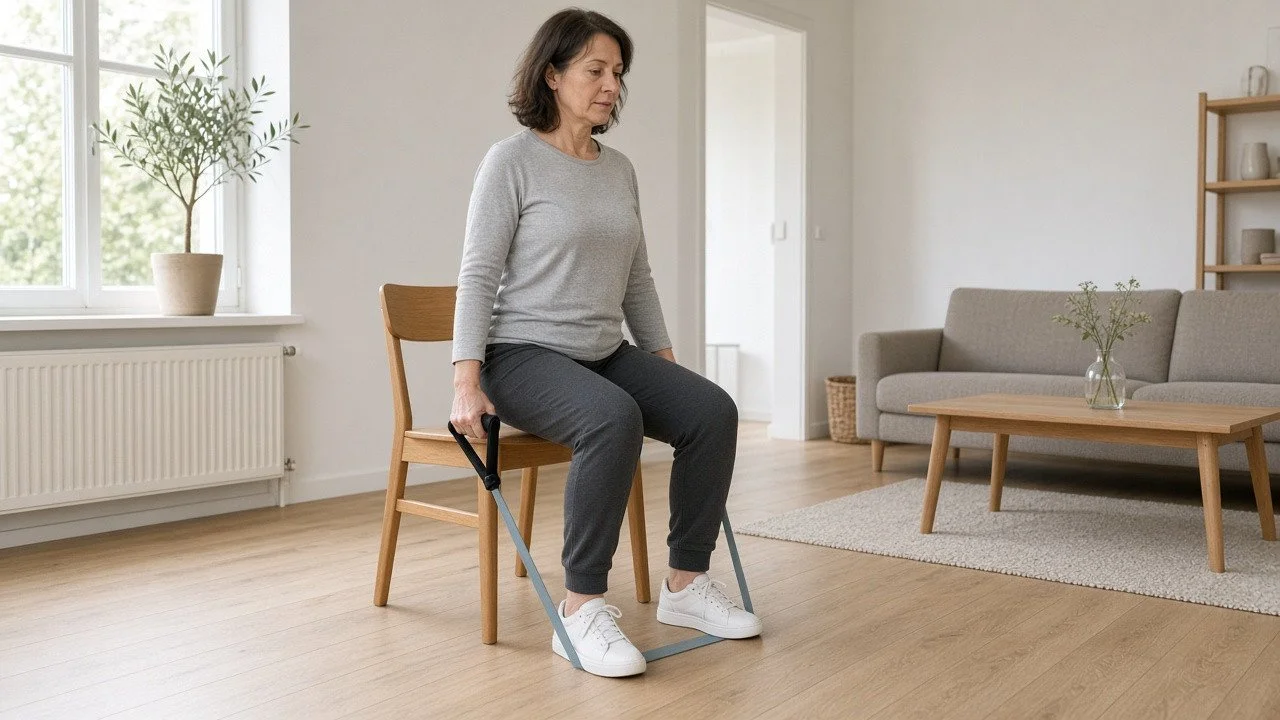
The same squat, hinge, row, and press patterns appear in our Free Lower Body Workout and in the timed work on Why Circuit Train? You can load those patterns with tubes instead of bodyweight alone, and add tension as they get easier.
Strength work also leans on what you eat. If you want a daily protein number to pair with your band sessions, work it out in How Much Protein Do I Need. Sleep and stress care belong in the same weekly habit; they are not separate fixes.
Emerging. Better trials that isolate elastic-band training from other resistance tools will test how specific the blood-sugar signal is.
Application: what to do today
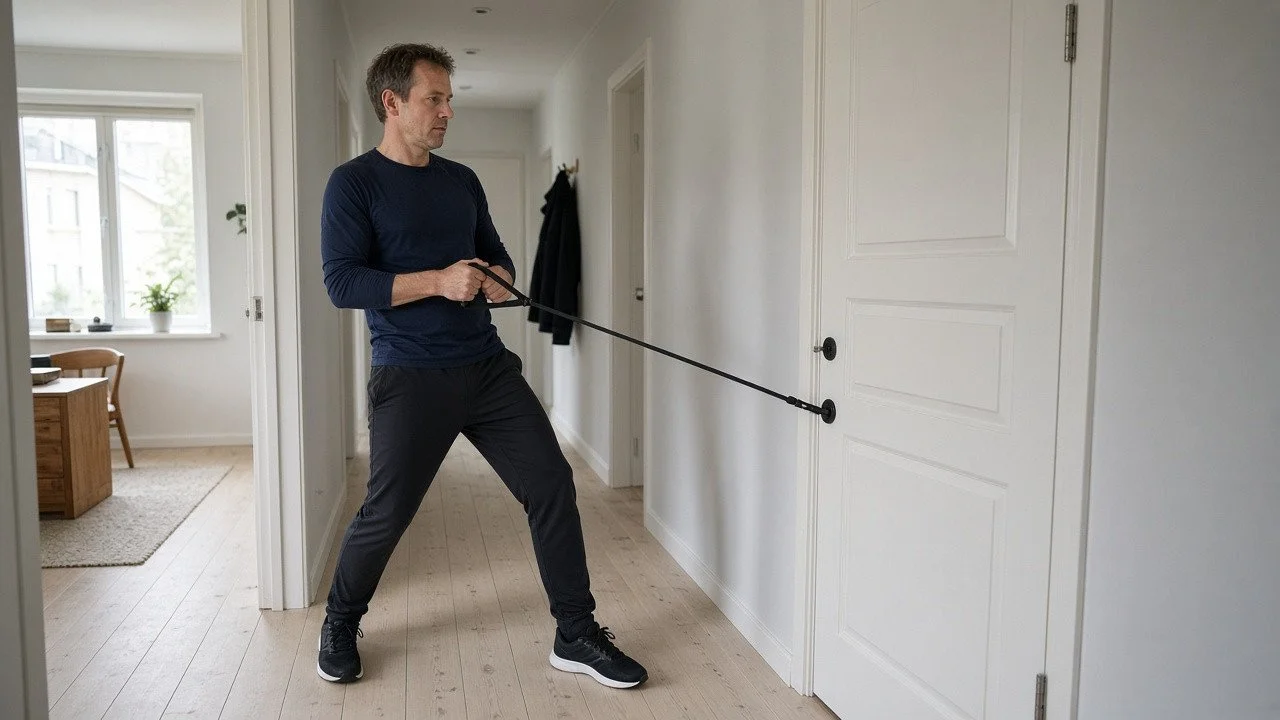
Warm up for about five minutes: easy marching, arm circles, a few bodyweight squats, and a light pull on the tubes. Check the door anchor before you load it — the door should close toward you, with the anchor at a stable hinge or jamb, not on loose trim.
One way to start, not the only plan, is a full-body session two or three days a week, with a day of rest between. Do two sets of a challenging eight to twelve reps of these five moves: a squat or sit-to-stand, a hinge or band good morning, a row, a press, and a core hold (a Pallof press or a plank with light band tension). Choose a tension you can control for every rep. If a tube nicks, retire it.
Safety, in brief: keep the band’s path off your face and eyes; the inner cord in this set reduces snap-back, it does not eliminate it. Natural latex is a problem if you have a latex allergy. Inspect tubes and clips before every session. Stop for sharp pain, dizziness, or chest discomfort.
For two weeks, run the sessions, and note whether you finished with form intact and how you felt the next day. That is a habit check, not a trial result.
Fire & Ice Wellness LLC may earn a commission if you buy through links on this page, at no extra cost to you.
The set we checked is the Bodylastics Pro Series Resistance Band Set, PRO 3–310 LBS Set Camo (ASIN B012ZWS9DA), about $69 ($68.97) as of November 17, 2026 (America/Chicago), in stock, and rated 4.6 out of 5 from 868 ratings at that check. It is a six-tube kit with handles, ankle straps, a door anchor, an anywhere anchor, and a bag. The listed 310-pound figure is a stacked manufacturer maximum, not a barbell equivalent. Some listing headlines still say “Basic Series” even when this Camo Pro set is selected; the link above opens the Camo Pro set.
View the Bodylastics Pro 3–310 Camo set on Amazon
Strong body. Sharp mind. No gym. Real coaches. Next, try the free workouts linked above, or take the Sorting Ceremony.
Body engineered.
References
- U.S. Department of Health and Human Services. Physical Activity Guidelines for Americans, 2nd edition. 2018.
- World Health Organization. Guidelines on physical activity and sedentary behaviour. 2020.
- Qadir, R., Sculthorpe, N. F., Todd, T., & Brown, E. C. (2021). Effectiveness of resistance training and associated program characteristics in patients at risk for type 2 diabetes: A systematic review and meta-analysis. Sports Medicine — Open, 7, 38.
- American Diabetes Association. Standards of Care in Diabetes (current).
- Kurzweil, R., & Grossman, T. (2009). Transcend: Nine Steps to Living Well Forever.
Disclosure. Fire & Ice Wellness LLC is a participant in the Amazon Services LLC Associates Program, an affiliate advertising program. We may earn a commission if you buy through links on this page, including Amazon links tagged fireandicew0e-20. That does not change the price you pay. This page is educational, not medical advice, and nothing here is meant to diagnose, treat, cure, or prevent any disease, including diabetes or a hormone condition.
