

Mind
How to Meditate for Beginners: A Simple 15-Minute Daily Reset
Andy Puddicombe spent years as a Tibetan Buddhist monk, then left that life to make a short daily sit something an ordinary person could keep at home. In 2010 he co-founded Headspace with Rich Pierson, and he became the voice of its guided meditations. He teaches that a few quiet minutes, kept up most days, is the practice — not a perfect hour. If you want to know how to meditate for beginners, that is the promise here: a simple sit you can start at 5–10 minutes and build toward 15–20, in a quiet place, with no special kit required.
Key Takeaways
A short daily sit can help some people with stress and anxious mood. Effects on blood pressure and heart-rate variability are modest, and meditation is an adjunct to care — not a treatment for high blood pressure, insomnia, or depression.
- Start at 5–10 minutes and build toward 15–20. Daily practice matters more than the clock.
- A minority of people feel worse, including anxiety or trauma memories. Stop if distressed.
- Optional: one or two minutes of slow breathing at about six breaths a minute.
Observation: what the data shows
Expert spotlight
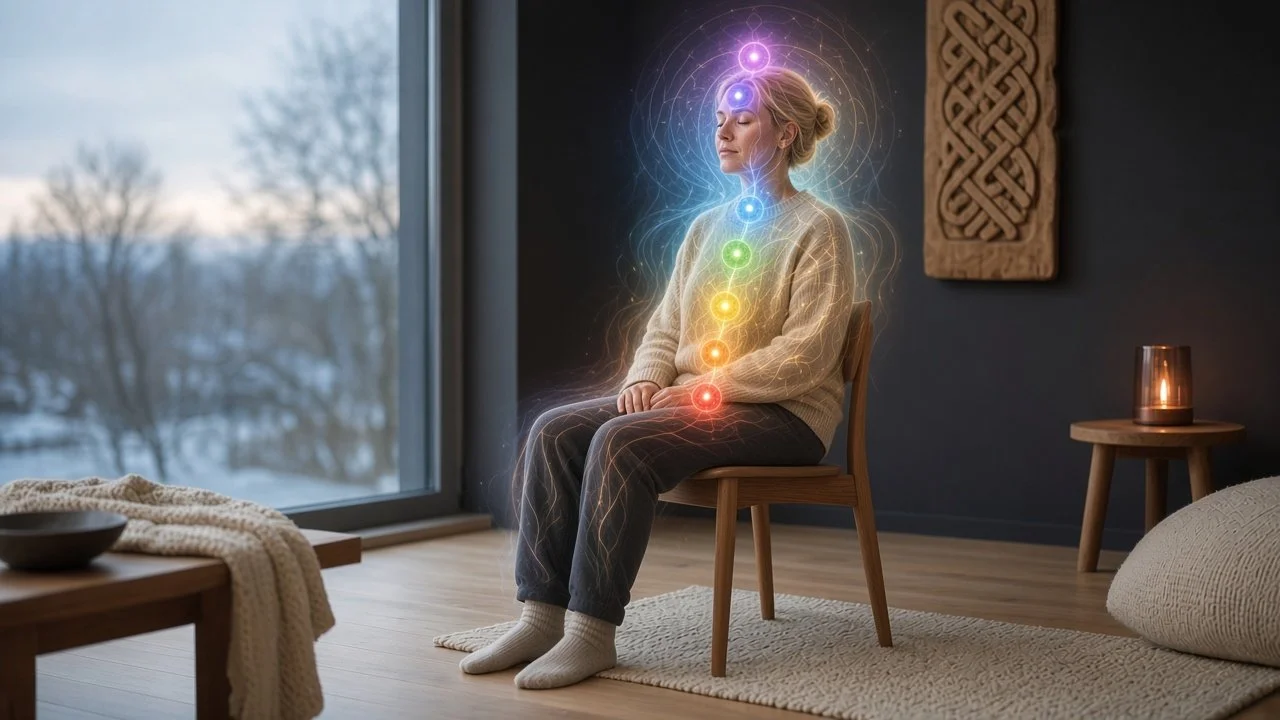
Herbert Benson[1], who worked at Harvard, described what he called the relaxation response. He taught a simple sit: a quiet place, a comfortable seat, eyes closed, a few slow breaths, and a soft word repeated silently on the out-breath — or just the feeling of the breath — with a gentle return when the mind wanders. Beginners start at 5–10 minutes and build toward 15–20. The reviews below are the evidence anchor for what a short daily sit in that family can and cannot support.
Andy Puddicombe, whose path opened this post, describes a short daily practice as enough to begin. That is his framing, not an endorsement of this page.
Barry Morguelan teaches a practice he calls Source Energy. He describes it as a practice from a Chinese energy tradition, and he teaches it through guided breathing visualizations of about 20 minutes a day. His account of the practice is at Energy for Success.
A 2014 systematic review by Goyal and colleagues found moderate evidence for small improvements in anxiety, depression, and pain, weaker evidence for stress, and little for sleep. Meditation was not shown to be better than other active treatments.[2]
Sleep findings need a limit. Reviews by Black and by Gong found that structured mindfulness programs may mildly improve some sleep measures in people who already sleep poorly, not a 15-minute beginner sit as insomnia treatment.[4][5]
A 2017 American Heart Association scientific statement in the Journal of the American Heart Association says meditation may be considered a reasonable adjunct to usual cardiovascular risk care, with modest blood-pressure evidence, not a replacement for guideline treatment.[3]
Basso and colleagues asked meditation-naïve adults to sit for about 13 minutes a day; mood, attention, memory, and anxiety on a lab stress test improved at eight weeks, not at four.[6]
Slow breathing is an optional add-on. Zaccaro and Laborde and colleagues found that voluntary slow breathing, often around six breaths a minute, is linked to a short rise in heart-rate variability and reports of relaxation — a physiology finding, not a blood-pressure treatment.[7][8]
A 2020 review by Farias and colleagues estimated that about eight percent of people in meditation studies reported adverse effects, most often anxiety, low mood, or unusual thinking. Britton and colleagues also found that a minority had a hard time after an eight-week mindfulness program, including lasting difficulty for some.[9][10]
Interpretation: what it means
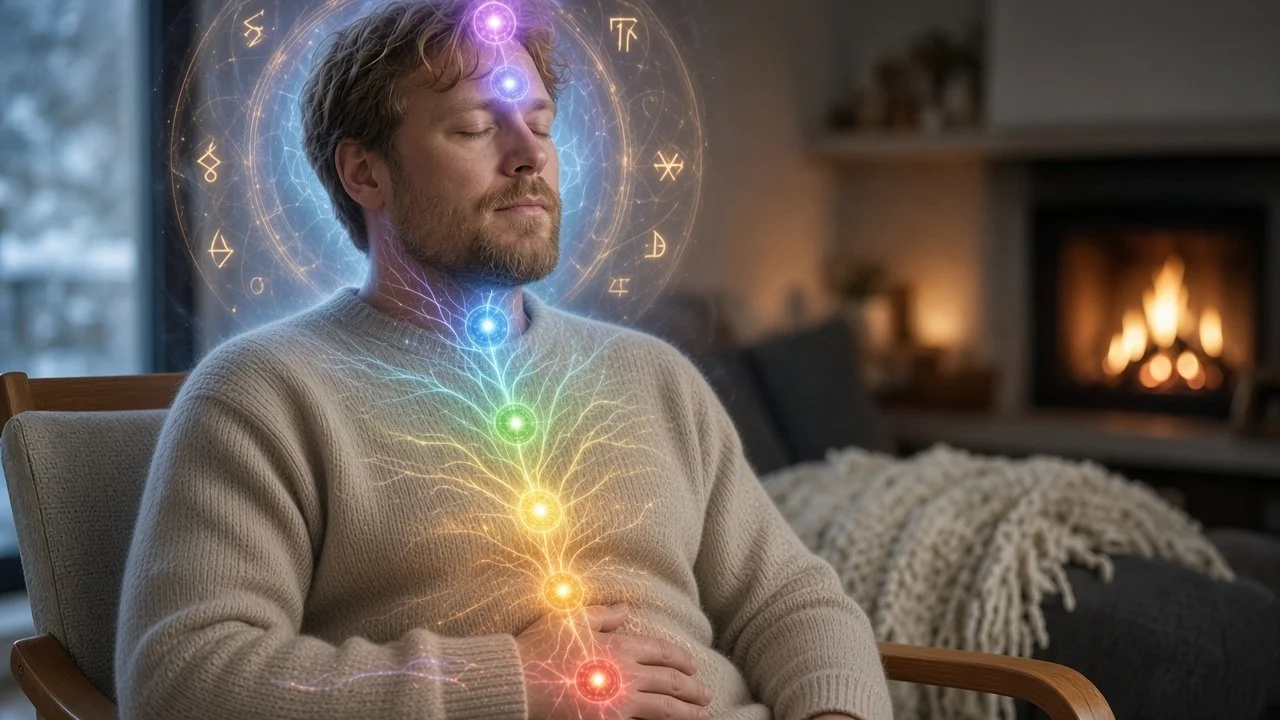
The useful claim is small: a short daily sit can help some people with stress and anxious mood, especially when kept up for weeks, not days. It does not need a special belief, an empty mind, or a long session on day one.
Read "a calmer heart" as modest blood-pressure and heart-rate-variability evidence, and as an adjunct to care, not a cardiac treatment. The sleep studies support structured programs in people who already sleep poorly, not a 15-minute home sit as insomnia treatment. Goyal's moderate findings for anxiety and depression describe formal programs, not a promise that this routine will treat those conditions.
If inward focus has been difficult, or if you live with a heart condition, dizziness, or a mental-health condition, talk with your clinician before you make this a daily habit.
Correlation: how it connects
Stress care and sleep care travel together. If evenings are already part of your routine, the evidence review in Magnesium Supplement Evidence sits in the same weekly habit as a short sit — a nutrient question and an attention practice, not two competing fixes.
Emerging. Wearables can make heart-rate variability during a slow-breathing minute easier to notice. That is a useful self-check. It does not turn a beginner sit into a treatment.
Application: what to do today
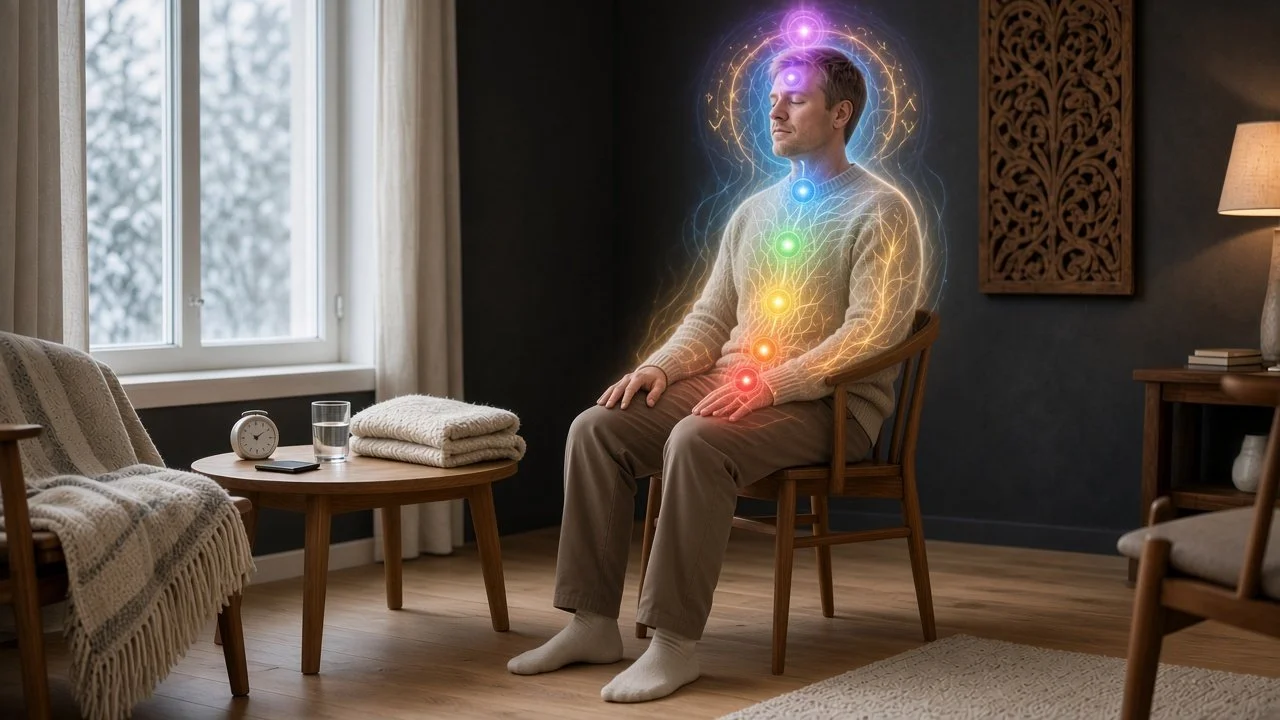
- Sit in a quiet place. Close your eyes. Take a few slow breaths.
- On each out-breath, silently repeat a soft word, or just feel the breath. When the mind wanders, notice it and return, without scolding yourself.
- Start with 5–10 minutes. Build toward 15–20 minutes on most days. Showing up daily matters more than the clock.
- Optional add-on: one or two minutes of slow breathing at about six breaths a minute (even in and out) before or after the sit.
- Stop if you feel distressed, unusually anxious, or if old trauma comes up, and talk with a clinician. This is not a treatment for high blood pressure, insomnia, or depression.
For two weeks, note whether you completed the sits and how you felt that evening and the next morning. That is a habit check, not a trial result.
Strong body. Sharp mind. No gym. Real coaches. Next, read Magnesium Supplement Evidence, or take the Sorting Ceremony.
Body engineered.
References
- Benson, H., Beary, J. F., & Carol, M. P. (1974). The relaxation response. Psychiatry, 37(1), 37–46.
- Goyal, M., Singh, S., Sibinga, E. M. S., et al. (2014). Meditation programs for psychological stress and well-being: A systematic review and meta-analysis. JAMA Internal Medicine, 174(3), 357–368.
- Levine, G. N., Lange, R. A., Bairey-Merz, C. N., et al. (2017). Meditation and cardiovascular risk reduction: A scientific statement from the American Heart Association. Journal of the American Heart Association, 6(10), e002218.
- Black, D. S., O’Reilly, G. A., Olmstead, R., Breen, E. C., & Irwin, M. R. (2015). Mindfulness meditation and improvement in sleep quality and daytime impairment among older adults with sleep disturbances: A randomized clinical trial. JAMA Internal Medicine, 175(4), 494–501.
- Gong, H., Ni, C. X., Liu, Y. Z., et al. (2016). Mindfulness meditation for insomnia: A meta-analysis of randomized controlled trials. Journal of Psychosomatic Research, 89, 1–6.
- Basso, J. C., McHale, A., Ende, V., Oberlin, D. J., & Suzuki, W. A. (2019). Brief, daily meditation enhances attention, memory, mood, and emotional regulation in non-experienced meditators. Behavioural Brain Research, 356, 208–220.
- Zaccaro, A., Piarulli, A., Laurino, M., et al. (2018). How breath-control can change your life: A systematic review on psycho-physiological correlates of slow breathing. Frontiers in Human Neuroscience, 12, 353.
- Laborde, S., Allen, M. S., Borges, U., et al. (2022). Effects of voluntary slow breathing on heart rate and heart rate variability: A systematic review and a meta-analysis. Neuroscience & Biobehavioral Reviews, 138, 104711.
- Farias, M., Maraldi, E., Wallenkampf, K. C., & Lucchetti, G. (2020). Adverse events in meditation practices and meditation-based therapies: A systematic review. Acta Psychiatrica Scandinavica, 142(5), 374–393.
- Britton, W. B., Lindahl, J. R., Cooper, D. J., Canby, N. K., & Palitsky, R. (2021). Defining and measuring meditation-related adverse effects in mindfulness-based programs. Clinical Psychological Science, 9(6), 1185–1204.
Disclaimer. As an Amazon Associate we earn from qualifying purchases. This page is educational, not medical advice, and nothing here is meant to diagnose, treat, cure, or prevent any disease, including high blood pressure, insomnia, anxiety, or depression.
