

Machine
Are Smart Rings Worth It? What Oura and RingConn Can (and Can't) Tell You
The first number some people see in the morning is a sleep score. Dr. Peter Attia, writing in April 2019, set a hard test for wearables — and disclosed, in the same essay, that he is an investor in and advisor to Oura. That piece is a framework from 2019, not a review of today’s Ring 4 or Ring 5. Dr. Matthew Walker, a UC Berkeley sleep scientist and, separately, a longstanding Oura member, contributor, and medical advisory board member, teaches a simpler habit: don’t obsess over a single night’s score; watch weekly trend lines instead. Dr. Cheri Mah, a Stanford sleep physician, describes the same practice, and she names the risk on the other side of the data: orthosomnia, when chasing a “perfect” sleep score starts to keep people awake. This post is about what a ring can and cannot tell you, and how to weigh a paid membership against a no-subscription ring — not about diagnosing a condition or promising better sleep.
Key Takeaways
- Experts first. Walker and Mah point to trends over weeks, not a nightly score. Attia’s 2019 essay sets a hard test for whether a wearable is useful, and discloses his role as an Oura investor and advisor; Walker is on Oura’s medical advisory board.
- Accuracy stays modest. In a 2022 lab study, an earlier Oura ring (Generation 2) was close to ECG for resting heart rate, in a looser “good” range for HRV, and only moderate at sleep staging. That study did not test Ring 4, Ring 5, RingConn, or the Polar H10.
- Cost is a two-year question. An Oura membership is a recurring charge; RingConn’s site says no subscription is required. Compare hardware plus any membership at the current price.
- A score is not a diagnosis. Samsung’s Galaxy Ring can flag signs of sleep-apnea risk — news about a screening feature, not a diagnosis, and not a product we are selling here. If the app makes you anxious, Mah’s advice is to look weekly, take a break, or switch to a paper sleep journal.
Observation
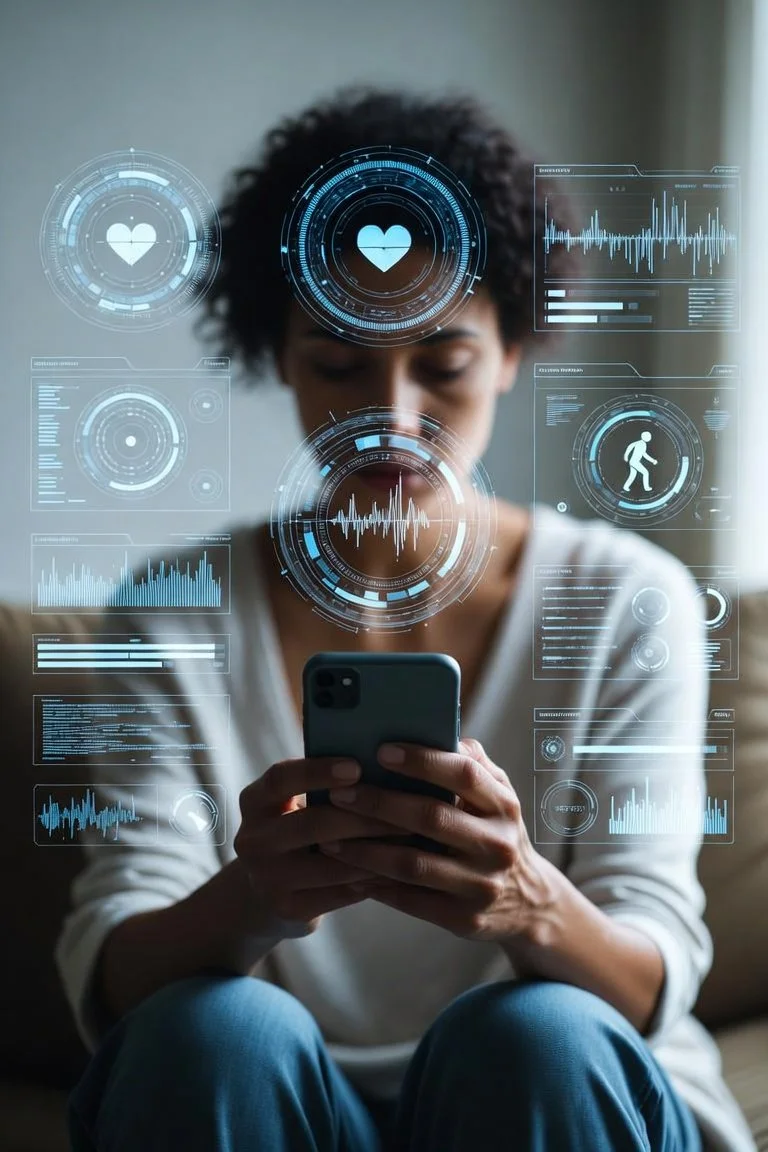
Dr. Peter Attia, in that April 2019 essay, puts it plainly: “In general, I find the vast majority of wearables of little use to me.” The measure, he writes, has to matter (he treats heart-rate variability as mattering, step counts less so), be measurable accurately, arrive in time to be useful, and preferably give feedback a person can act on. The two devices that best fit that framework for him — “(NB: nothing fully fits…yet)” — were “a continuous glucose monitor (the Dexcom G6) and the Oura ring (disclosure: I’m an investor in, and advisor to, Oura).” That is his 2019 view, with the conflict disclosed in the same breath — not a verdict on Ring 4 or Ring 5.1
Dr. Matthew Walker teaches the daily habit more simply. In an official Oura Q&A published March 26, 2024 — the same page that describes him as a longstanding Oura member, contributor, and medical advisory board member — he says: “Don’t obsess over it. And if you are not stressed by it, try to focus on weekly trend lines, not nightly headlines.” His wind-down advice there includes music, reading, meditating, or a hot bath. A short meditation practice is one place to start.2
Next Big, updating today, notes that smart-ring searches are up sharply this year, with December the usual peak month — but a busy season is not proof a ring will help.3
Interpretation
The independent study we are using is older than the rings in the menu. In 2022, Miller, Sargent, and Roach compared six wearables with overnight PSG and ECG in 53 healthy young adults, for a single night. One of those devices was an Oura Ring Generation 2 — not Ring 4, not Ring 5, not RingConn, and not the Polar H10 chest strap (the Polar device in the study was a watch). Against ECG, Oura Gen 2 heart rate was in an “excellent” range (bias +0.1 beats per minute, absolute bias 1.8, ICC 0.85). Heart-rate variability (RMSSD) was in a “good” range (ICC 0.63), with a bias of −10.2 milliseconds and looser agreement at higher HRV. Against PSG, two-state sleep/wake agreement was 89% (κ = 0.51, “moderate”). Multi-state sleep staging was 61% (κ = 0.43, also “moderate”), and the authors concluded that all six devices “require further improvement for the assessment of specific sleep stages.” They note it is “reasonable to assume” newer models will do at least as well until they are independently validated — that is an assumption, not a new study. We are not extending those numbers to Ring 4, Ring 5, or RingConn.4
Dr. Cheri Mah makes the same distinction in practice. She describes duration, bedtime, wake time, and schedule estimates as more reliable than specific stages such as REM or deep sleep. Wearables, she says, “are not intended to diagnose sleep disorders.”5 On the show notes for an October 2025 episode of his podcast, Walker distinguishes a device’s flawed “absolute accuracy” from more useful “relative accuracy,” and highlights long-term trends over single-night scores. Those notes are a summary, not a transcript.6
Correlation
The other fork in the road is cost. Oura’s full app experience is built around a membership, billed monthly or annually in the United States, with a complimentary first month for new members. Membership is tied to the Oura account, not to the physical ring. RingConn’s site says, “No subscription required.”7 If you are comparing the two, add two years of any membership to the current hardware price, then decide whether you want Oura’s ecosystem or a no-subscription ring. Hardware prices move; the figures we checked for the menu below can change.
Emerging. Oura Ring 5 is on sale on Oura’s own site, $100 off, through November 30, 2026. That is current-generation context, not a buy link in this post, and vendor language about accuracy is not an independent validation.8 Separately, Samsung announced on November 3, 2026 (a Korea-dated release) that an upgraded Sleep Apnea Feature is available on the Galaxy Ring, after FDA clearance for the update in July 2026 and approval from Korea’s MFDS. Samsung says it is the first company to bring sleep-apnea risk detection to a smart ring. In Samsung’s own wording, the over-the-counter feature is intended to detect signs of moderate to severe sleep apnea — significant breathing disruptions — in users 18 and older, from two valid nights in a 10-day window. It is not intended for people already diagnosed with sleep apnea, and “Users should not use this feature to replace traditional methods of diagnosis and treatment by a qualified clinician.”9 That is screening news about one brand of ring, not a diagnosis, and not a product in our menu.
Overnight tracking is only part of a day. For evening rhythm, see our guide to magnesium for sleep. A walking pad is daytime movement, not a way to “fix” last night’s score. A chest strap, not a ring, is the usual tool if you want workout heart rate — which is why a Polar H10 is an optional item in the menu, not a second ring.
Application
Sleep scores are a trend tool, not a grade. If checking the app makes you anxious, or you find yourself chasing a “perfect” night, Dr. Cheri Mah’s advice is to look at weekly trends only, take a break from the ring, or switch to a pen-and-paper sleep journal. A device that costs you sleep is not doing its job.
If you already own a ring, start with a week of trends, not last night’s number. Walker’s wind-down list — including a short meditation — is a better evening habit than refreshing the score. If you are shopping, size first, then compare two-year cost (hardware plus any membership) at the current price, and decide whether you want a membership ecosystem or a no-subscription ring.
Consumer smart rings are wellness devices. They are not meant to diagnose, rule out, or treat sleep apnea or any other condition. A news item about a regulated risk-notification feature on one brand of ring does not change that. If a reading worries you, or you already have trouble sleeping, talk with a clinician.
If you already wear a ring and want a second pair of eyes on the weekly trend, that is a conversation we can have at Fire & Ice — not a named program for sale here. The place to start is the Sorting Ceremony.
Strong body. Sharp mind. No gym. Real coaches. Next, read How to Meditate for Beginners, or take the Sorting Ceremony.
Body engineered.
References
- Attia, P. (2019, April 7). My view on wearables. Peter Attia, MD.
- Oura Team. (2024, March 26). The Oura Q&A: Sleep scientist Dr. Matthew Walker, PhD. Oura Ring.
- Next Big. (2026, November 19). Smart rings market: size, growth and outlook.
- Miller, D. J., Sargent, C., & Roach, G. D. (2022). A validation of six wearable devices for estimating sleep, heart rate and heart rate variability in healthy adults. Sensors, 22(16), 6317. PMID 36016077, PMC9412437. DOI 10.3390/s22166317.
- Cleare, A., & Brock, S., quoting Mah, C. (2024, August 11). Sleep wearables — are they worth it? A Stanford sleep doctor weighs in. Stanford Lifestyle Medicine.
- The Matt Walker Podcast. (2025, October 13). #110: The science behind wearable sleep monitoring (show notes; no transcript on the page).
- Oura. Membership. See also RingConn, “No subscription required.”
- Oura. Oura Ring 5 store. Offer ends November 30, 2026. See also Introducing Oura Ring 5.
- Samsung Global Newsroom. (2026, November 3). Upgraded Sleep Apnea Feature now available on Galaxy Ring following regulatory approvals from US FDA and Korea MFDS.
Disclaimer. As an Amazon Associate we earn from qualifying purchases. Fire & Ice Wellness LLC may earn a commission if you buy through links on this page. That does not change the price you pay. This article is for general information. It is not medical advice and is not meant to diagnose, treat, cure, or prevent any disease. Talk with your clinician about your own sleep, heart health, and any device or app you use.
